Good morning
On 19 October 1781, British troops gave up at Yorktown, a small town in Virginia, in the United States. It was the last big battle of the war that won America its independence. Britain accepted the loss two years later.
Today's issue looks at an island bigger than most people think, a waterfall unmatched in scale, and a calendar with an extra month.
In today's edition
- The island bigger than most people guess
- The waterfall with no equal in scale
- A calendar with a 13th month
- The flag that is never lowered
- Guess the country from its outline
- Fill a grid with matching countries
New Guinea · Fact of the day
New Guinea is the world's second largest island, not Borneo
Many people picture Borneo, in Southeast Asia, as the second biggest island on Earth after Greenland. It is a reasonable guess: Borneo is famous for its rainforests and is often mentioned in the same breath as giant islands.
The true answer is New Guinea, in the Pacific region of Melanesia, shared by Indonesia and Papua New Guinea. It covers about 786,000 square kilometres, roughly the size of Sweden and Norway combined, which is about 38,000 square kilometres more than Borneo.
New Guinea's land mass is harder to picture because so much of it is steep and mountainous, so the island feels smaller on a flat map than it really is.
↗ Send this fact to a friend17.92° S, 25.85° E · Place of the day
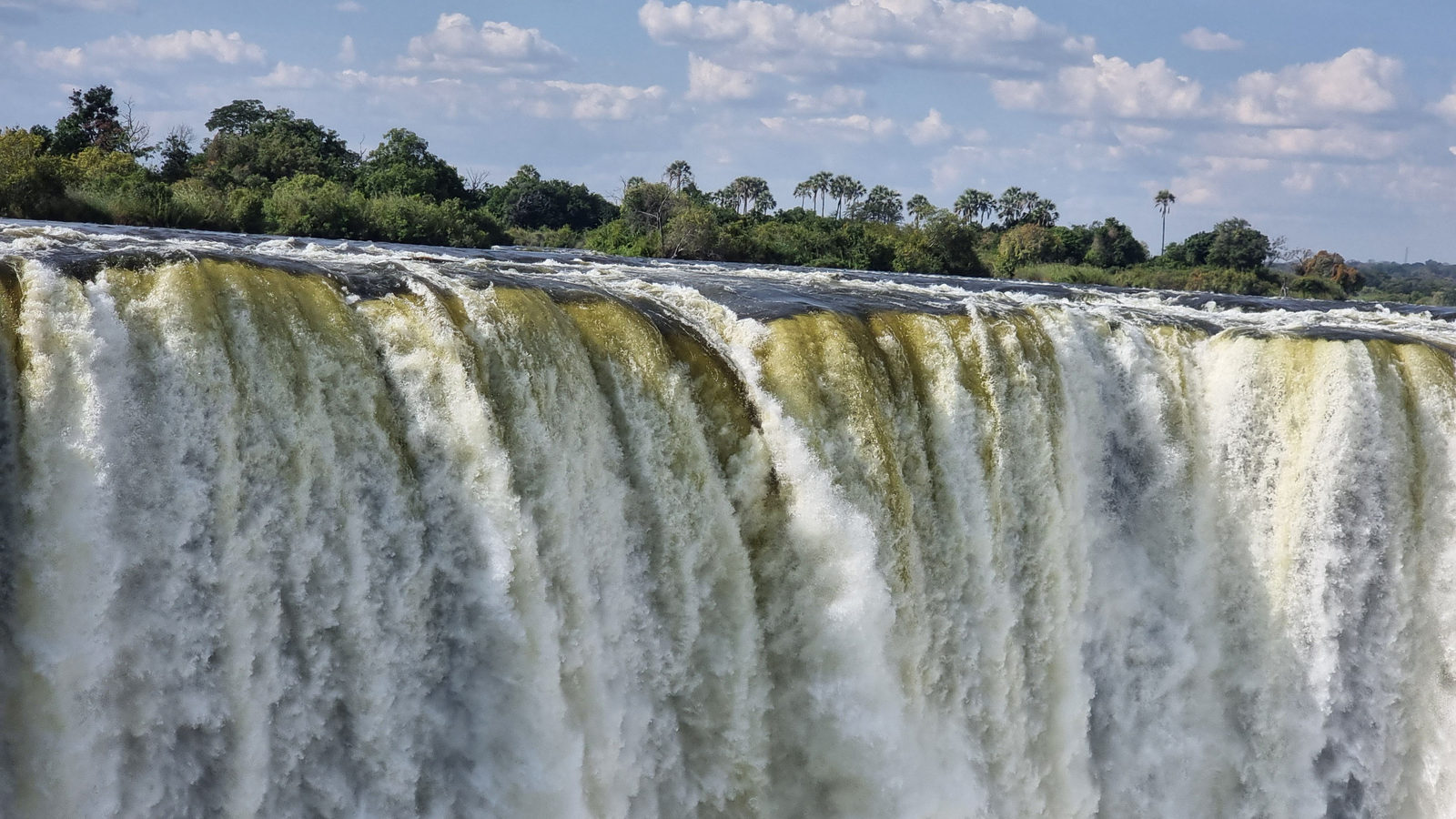
Victoria Falls
Victoria Falls, known locally as Mosi-oa-Tunya, sits on the Zambezi River on the border between Zambia and Zimbabwe in southern Africa.
It is not the tallest waterfall on Earth, nor the widest on its own. But it forms the largest single sheet of falling water anywhere, about 1,708 metres wide with a drop of up to 108 metres.
At peak flow it can send down up to 500 million litres of water every minute. The spray this throws into the air can rise 500 metres, about the height of a tall skyscraper, and can be seen from 50 kilometres away.
 Play today's Worldle
↻ Also on the map
Saudi Arabia's flag is never lowered to half-mast Saudi Arabia's flag, standardised since 1973, carries the Islamic declaration of faith above a sword. Lowering it, even in mourning, would disrespect that text, so it stays raised. The flag is made with two mirrored sides, so the script reads correctly from either face.
New Zealand's only native land mammals are bats Every other land mammal in New Zealand, a country in the South Pacific, from possums to deer, was brought in by people. The long-tailed bat and the lesser short-tailed bat are the sole survivors that evolved there naturally. A third species has not been seen since the mid-1960s.
Between issues
Fancy a different kind of challenge? GeoGrid gives you a 3 by 3 grid where each row and column needs a country that fits both categories. It rewards knowing your geography from a few unusual angles at once.
 Play today's GeoGrid →
Locate the country
Today's mystery shape · 19 October 2026
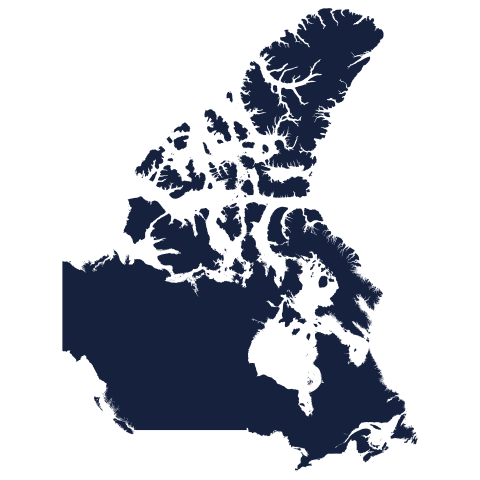
A new country silhouette is waiting for you today. Look at its outline and borders, then take your best guess. We reveal the answer here tomorrow.
Guess it on Worldle →Yesterday, revealed
Yesterday, 18 October 2026
It was Kuwait, Yesterday's silhouette was a tricky one for many readers. If you placed it correctly, well done. If not, every outline gets easier to read the more you practise, so take another look at the shape and its borders.
9.03° N, 38.74° E · By the numbers
The 13 months of Ethiopia's calendar
Ethiopia uses its own calendar for civil and church life alongside the Gregorian one most of the world follows. It has 13 months instead of 12. Twelve of them run to exactly 30 days, and a short final month, Pagumē, adds the remaining 5 days, or 6 in a leap year. The Ethiopian calendar also runs about 7 years and 8 months behind the Gregorian one, which is why Ethiopian New Year falls on 11 September. It is a reminder that there is more than one way to divide up a year.
FREE · WEEKLY EMAIL · GEOGRAPHY
Put the world in your inbox.
A new geography brief on the site every day, and one in your inbox every week.
That's the world
See you tomorrow. The Teuteuf team
Sources: Wikipedia: List of islands by area · UNESCO World Heritage Centre: 'Mosi-oa-Tunya / Victoria Falls' (Statement of Outstanding Universal Value) · Encyclopaedia Britannica: "Flag of Saudi Arabia" · New Zealand Department of Conservation (Te Papa Atawhai), "New Zealand bats/pekapeka" · CNN Travel: "The country where it's still 2016" (story behind Ethiopia's unique calendar)