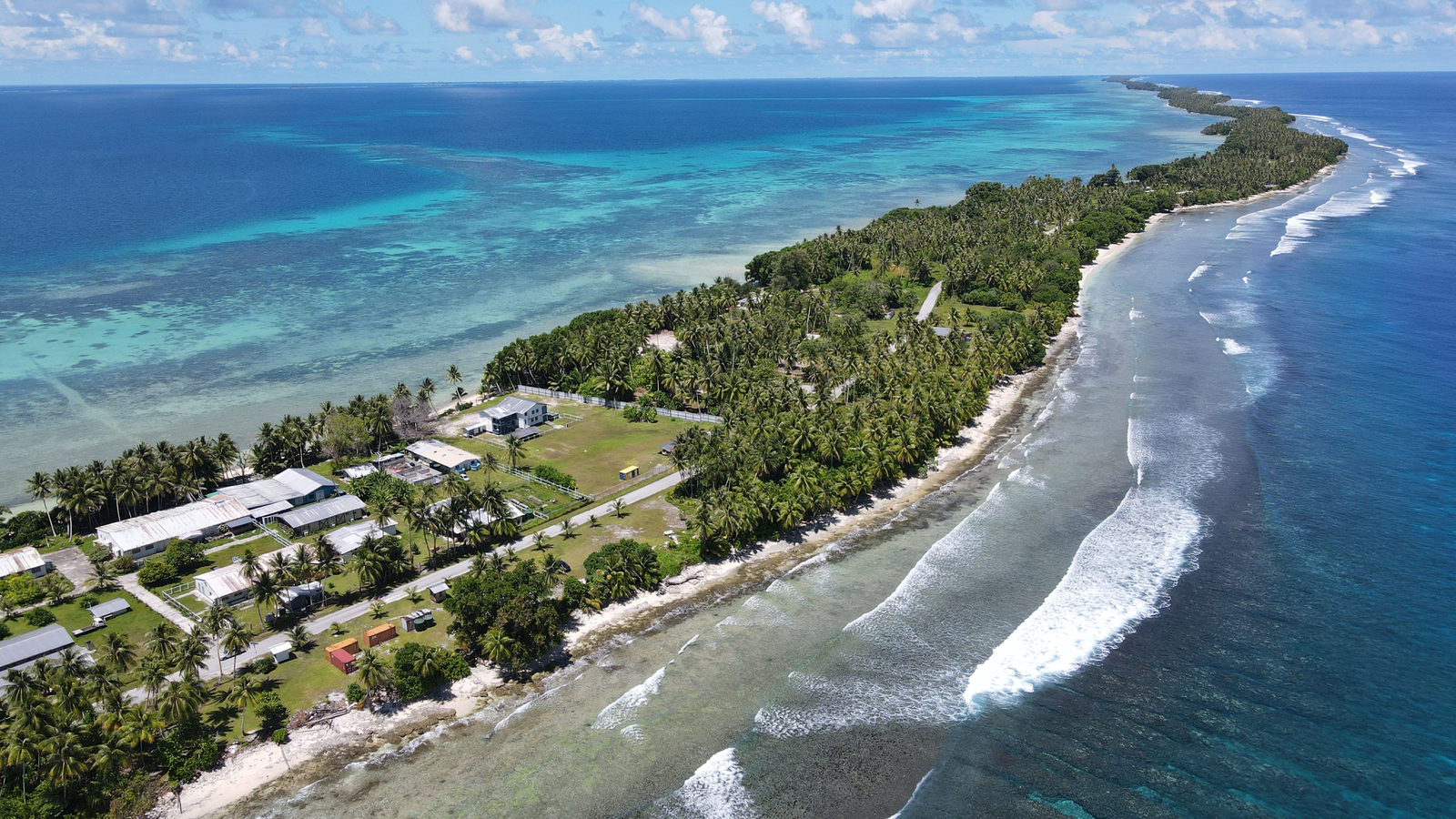
Good morning
On 18 October 1867, the United States formally took possession of Alaska from Russia. Its flag went up at Sitka, after paying 7.2 million dollars for the territory. Gold and oil later made it one of the country's richest states.
Today's issue heads to the Pacific. We visit a Melanesian country where blond hair needs no European ancestor. We also meet a group of islands named by a man who barely saw them, and a shift in Fiji's population few people noticed.
In today's edition
- Darkest skin, brightest blond hair, no European roots
- The islands Cook named but barely saw
- Vanuatu's court needed a king who vanished
- Sweden once added an extra day to February
- Fiji's population balance flipped within one lifetime
- Match three countries in one grid
Solomon Islands · Fact of the day
Some Solomon Islanders have very dark skin and naturally blond hair
Most people assume blond hair only comes from European ancestry. The Solomon Islands is a country of hundreds of islands in the South Pacific. There, roughly one in ten people among the dark-skinned Melanesian population has naturally blond hair, with no European ancestors at all.
Scientists sequenced the genes of over 900 Solomon Islanders and found no link to European ancestry. The cause is a change in a single gene that helps build hair pigment. It arose locally in the Pacific and is found nowhere else.
That gene change affects only hair colour, not skin colour. That is why very dark skin and blond hair appear together there, a combination pigment research had barely studied, because it had focused mostly on Europeans.
↗ Send this fact to a friend21.24° S, 159.80° W · Place of the day
The Cook Islands
The Cook Islands are a group of 15 islands scattered across the South Pacific, northeast of New Zealand. Despite the name, Captain James Cook did not choose it. In 1773, Cook called one small atoll Hervey Island, after a British official, and that name stuck to the group for decades.
The name Cook Islands only appeared in 1824, 45 years after Cook died. It was given by Adam Johann von Krusenstern, an admiral in the Imperial Russian Navy, on a map of the Pacific Ocean. Cook himself never saw Rarotonga, the largest island and home to the capital, Avarua. A European did not reach it until 1813.
The one island Cook actually stepped on, tiny Palmerston, has no people living on it.
 Play today's Worldle
↻ Also on the map
Vanuatu once had a court seat that the King of Spain had to fill From 1906 to 1980, Britain and France jointly ruled the New Hebrides, now Vanuatu, a Pacific island nation. Their shared court needed a neutral president, a post given by treaty to the King of Spain. Spain abolished its monarchy in 1931, leaving that post empty.
Sweden once had a 30 February In 1712, Sweden added an extra day to its calendar, making that February 30 days long. The country was trying to fix an earlier mistake while switching between calendar systems, so for one year it had to add a day rather than remove one.
Between issues
Travle gives you two countries and asks you to find the shortest path between them, stepping through their neighbours one border at a time. It rewards a good mental map of the world, and a few wrong turns along the way.
 Play today's Travle
Locate the country
Today's mystery shape · 18 October 2026
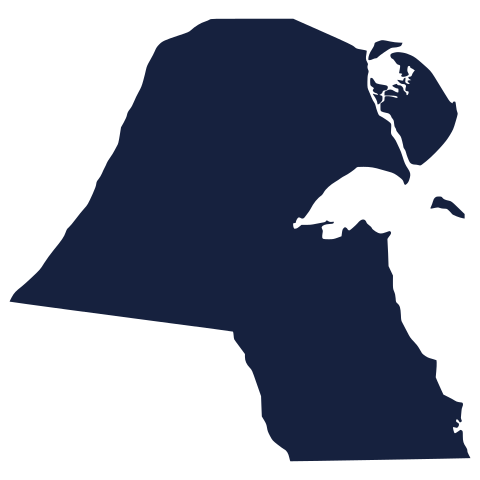
Today's silhouette is waiting below. Look at its outline and borders, and see if you can place it on the map. Make your guess, then come back tomorrow for the answer and the date it was first featured.
Guess it on Worldle →Yesterday, revealed
Yesterday, 17 October 2026
It was Togo, Yesterday's silhouette was a country that trips up even seasoned map readers, thanks to its unusual outline and modest size. If you placed it straight away, well done. If you didn't, you are in good company: it catches plenty of people out.
17.71° S, 178.06° E · By the numbers
Fiji's largest ethnic group, by census year
Fiji is a country of over 300 islands in the South Pacific. Most people picture it as a country of indigenous Fijians. From 1946 to 1986, it was not. Indo-Fijians are the descendants of Indian labourers. Around 60,000 of them were brought to Fiji from 1879 to 1916. For four decades, they outnumbered indigenous Fijians at every census. They peaked at just over half the population in 1966, roughly one in every two people on the islands. The balance flipped back only after many Indo-Fijians left the country, following unrest in 1987. A country's ethnic makeup can shift sharply within one lifetime.
FREE · WEEKLY EMAIL · GEOGRAPHY
Put the world in your inbox.
A new geography brief on the site every day, and one in your inbox every week.
That's the world
See you tomorrow. The Teuteuf team
Sources: Wikipedia: 'TYRP1' · Wikipedia, 'History of the Cook Islands' (Early European contact) and 'Cook Islands' (Etymology) · UK Parliament, Hansard: House of Commons, 'New Hebrides: Joint Court (President)', HC Deb vol 676 c874 · Lex / Danmarks Nationalleksikon (Den Store Danske), 'svensk kalender i 1700-tallet', by Jürgen Beyer · Migration Policy Institute, Migration Information Source country profile 'Fiji Islands: From Immigration to Emigration', by Brij V. Lal (leading historian of Fiji)