Good morning
On 31 October 1864, Nevada joined the United States as its 36th state. Congress moved quickly to admit it, partly to add votes in favour of ending slavery nationwide. Nevada has marked the date as its own ever since.
Today's issue looks at places where maps surprise us. We cover a city further north than its northern neighbour, the world's smallest country, and the far side of the planet from most of the United States.
In today's edition
- Why Seattle sits north of Toronto
- Vatican City's only border is Italy
- The volcano that filled the sky with water
- Vanuatu has the world's most languages per person
- Where the US Lower 48's opposite point lies
- Match countries to categories in a grid
Seattle Toronto latitude · Fact of the day
Seattle lies farther north than Toronto
Most people assume that any Canadian city sits north of any city in the United States. Seattle, a city in the state of Washington, shows that this is not always true.
Seattle sits at about 47.6 degrees north. Toronto, a Canadian city on Lake Ontario, sits at about 43.7 degrees north. That puts Seattle roughly 435 kilometres (270 miles) farther north, about the distance from London to Edinburgh.
The reason is the shape of the border. Near the Great Lakes, the line between the two countries dips south, so southern Canada reaches no higher than the latitude of several northern American states. Seattle, on the Pacific coast, keeps climbing north with no such dip.
↗ Send this fact to a friend41.90° N, 12.45° E · Place of the day
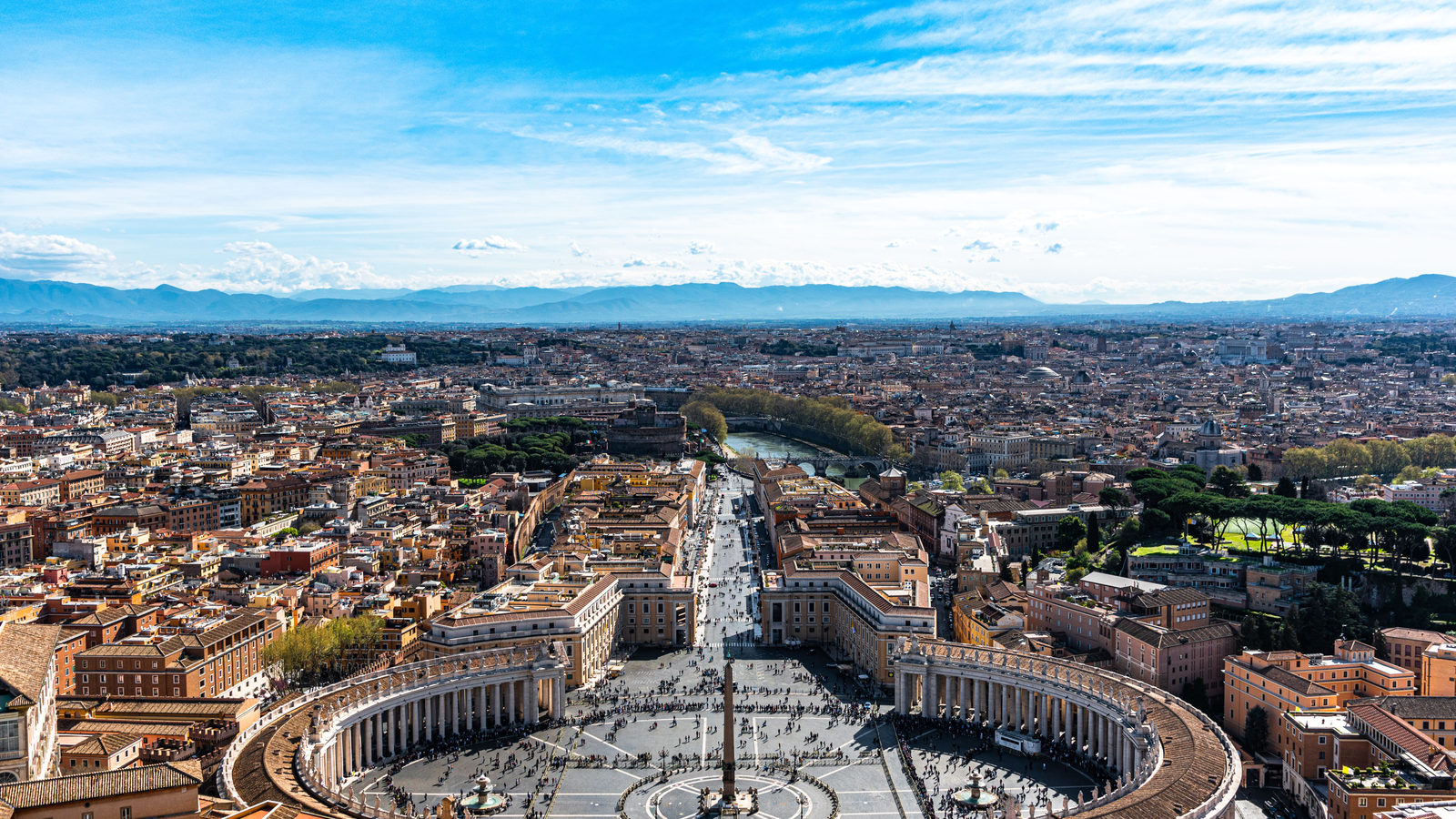
Vatican City
Vatican City is the world's smallest sovereign state. It sits entirely inside the city of Rome, the capital of Italy. It covers about 0.44 square kilometres, smaller than most large parks, and is home to only around 800 to 900 people.
Vatican City became independent in 1929, under a deal called the Lateran Treaty. Because it sits wholly inside Rome, it has only one border, and every bit of that border touches Italy. No other country reaches it.
Two other countries share this trait of being surrounded by just one neighbour. San Marino is entirely surrounded by Italy, and Lesotho is entirely surrounded by South Africa.
 Play today's Worldle
↻ Also on the map
Vanuatu has the most languages per person Vanuatu is a nation of about 300,000 people in the South Pacific. It has roughly 138 indigenous languages. Each is spoken by about 2,500 people on average, giving it the highest density of languages per person of any country.
Amsterdam Island sits opposite Colorado, through the planet Amsterdam Island, a tiny French island in the southern Indian Ocean, is the exact opposite point on the globe from part of Colorado. It is one of the only patches of land anywhere opposite the lower 48 states, since nearly all of them face open ocean instead.
Between issues
Fill a grid of nine squares, each one a country that fits both its row's and its column's category. It rewards knowing the map in several directions at once.
 Play today's GeoGrid
Locate the country
Today's mystery shape · 31 October 2026
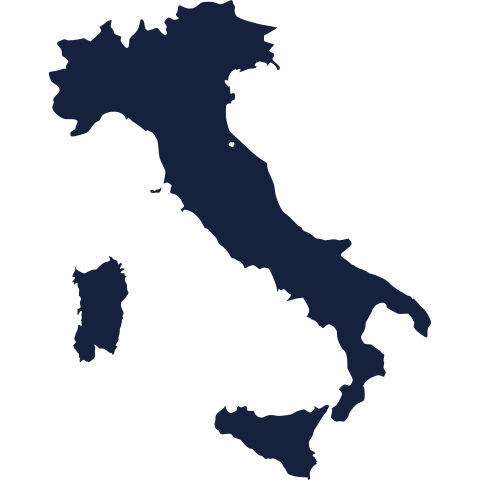
Today's silhouette is waiting for your best guess. Study its outline and borders, then take a guess at the shape on the map. We reveal the country tomorrow.
Guess it on Worldle →Yesterday, revealed
Yesterday, 30 October 2026
It was Philippines, Yesterday's silhouette was trickier than it looked for plenty of readers. Whether you placed it in seconds or needed every clue, well done for giving it a go. There is a fresh shape to puzzle over today.
21.25° S, 175.38° W · By the numbers
How much water the Hunga eruption added to the sky
On 15 January 2022, Hunga, an undersea volcano in the South Pacific, erupted explosively. It threw about 150 teragrams of water vapour into the stratosphere, the layer of air above where weather happens. That raised the stratosphere's entire water supply by roughly a tenth. It was the largest such jump in more than 30 years of satellite records. A similar-sized eruption usually also sends a lot of sulfur that high, a gas that normally cools the climate afterwards. Hunga's vent sat in shallow seawater, which washed out about 95 percent of its sulfur before it could rise. So it was the water, not the missing sulfur, that shaped what happened to the atmosphere next.
FREE · WEEKLY EMAIL · GEOGRAPHY
Put the world in your inbox.
A new geography brief on the site every day, and one in your inbox every week.
That's the world
See you tomorrow. The Teuteuf team
Sources: Wikipedia: Seattle · Encyclopaedia Britannica: Vatican City · Wikipedia: Languages of Vanuatu · Wikipedia: Antipodes · Zhou, X. et al., "Residence time of Hunga stratospheric water vapour perturbation quantified at 9 years", Communications Earth & Environment 7, 198 (Nature Portfolio; peer-reviewed, open access)