Good morning
On 25 September 1513, the Spanish explorer Vasco Núñez de Balboa climbed a ridge in what is now Panama. He became the first European to see the Pacific Ocean from the Americas. He waded into the water and claimed the entire ocean for Spain, a claim no one could ever have enforced.
Today's issue stays in that same ocean, with a look at New Zealand, Auckland and Papua New Guinea.
In today's edition
- New Zealand, the last large landmass people settled
- Auckland, a city built on 53 volcanoes
- Papua New Guinea's languages outnumber every other country's
- New Zealand's early vote for women
- Vanuatu's decades under two governments at once
- Guess a country from its outline
New Zealand · Fact of the day
New Zealand was the last large landmass people settled
Most people assume every large, liveable landmass has had people on it for thousands of years. Australia, for example, has been inhabited for over 50,000 years. New Zealand breaks that pattern. Polynesian voyagers, the ancestors of today's Māori, only reached it around the year 1280.
That makes New Zealand's human history younger than Oxford University and Notre-Dame de Paris, both already standing when people arrived. It came about 400 years after Norse sailors settled Iceland. It came about 800 years after people reached Madagascar, the island off East Africa. New Zealand sits far from any other coastline in the South Pacific. That distance made it one of the hardest places on Earth to find by sea.
↗ Send this fact to a friend37.09° S, 174.78° E · Place of the day
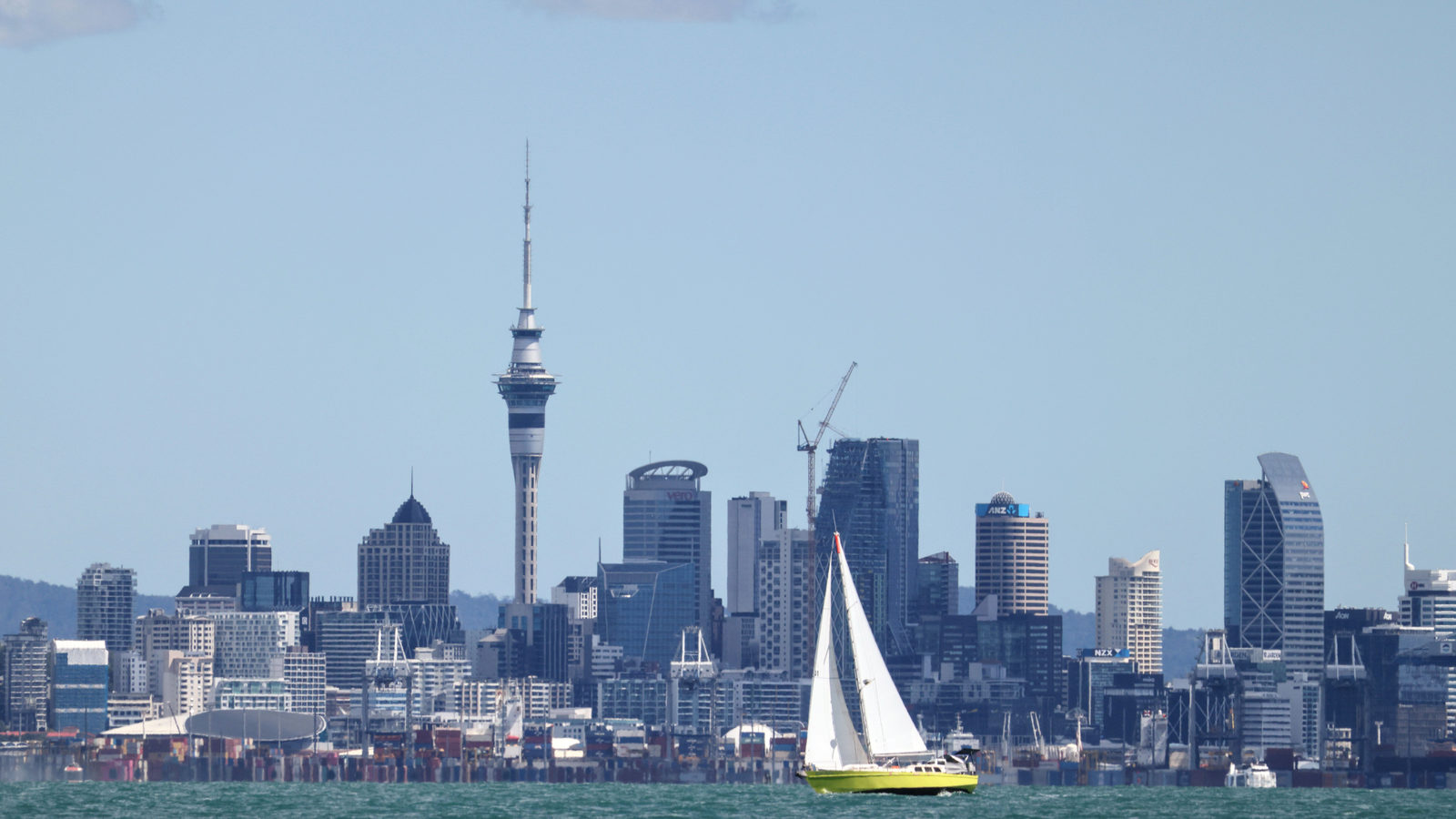
Auckland
Auckland is the largest city in New Zealand, an island country in the South Pacific, with about 1.7 million people. It sits on top of an active volcanic field, with 53 separate volcanoes spread across roughly 360 square kilometres of the city.
The field has been erupting on and off for about 193,000 years, and each eruption opens a brand new vent rather than reusing an old one. That means the next eruption could break ground almost anywhere in the city.
The most recent eruption built Rangitoto Island, in the Hauraki Gulf just offshore, only about 600 years ago. Māori who already lived in the area saw it happen.
 Play today's Worldle
↻ Also on the map
In 1893, New Zealand became first to give women the vote On 19 September 1893, New Zealand let all adult women vote in national elections. It was the first self-governing country to do so, 27 years before the United States and 25 years before the United Kingdom.
Vanuatu was once ruled by two countries at once From 1906 until independence in 1980, the Pacific islands now called Vanuatu were run jointly by Britain and France. Each power kept its own separate police, courts, schools and currency, side by side, for 74 years.
Between issues
In Travle, you get two countries and have to find the shortest path between them, crossing only shared borders one country at a time. It rewards a good mental map and a bit of patient guesswork.
 Play today's Travle
Locate the country
Today's mystery shape · 25 September 2026
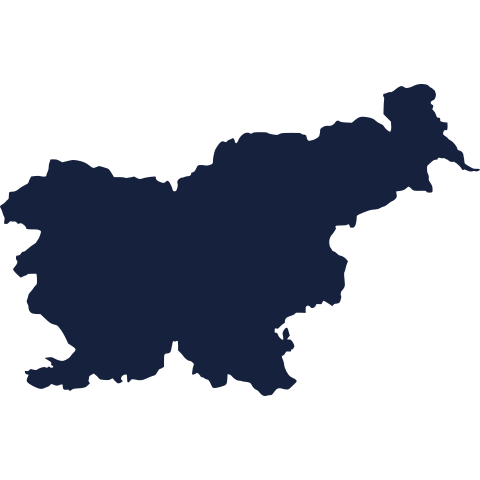
Today's silhouette is waiting for your guess. Study its coastline and borders, then take your best shot. Not sure? Have a go anyway: we reveal the answer tomorrow.
Guess it on Worldle →Yesterday, revealed
Yesterday, 24 September 2026
It was Republic of the Congo, If yesterday's shape had you stumped, you were not alone: some outlines give away far more than others. Whether you nailed it or not, there is a fresh silhouette waiting for you today, so take another look and see how you do.
9.44° S, 147.18° E · By the numbers
Papua New Guinea's languages
Papua New Guinea, a country of about 10.6 million people in the South Pacific, is home to 840 living languages. That is more than any other country on Earth. Indonesia comes second, with 706. Together, Papua New Guinea's languages make up close to one in eight of all living languages spoken worldwide. Much of the reason is geography. Steep mountains and dense forest kept villages cut off from one another for generations, so each community's speech developed on its own. It shows how isolation can shape a country's culture as much as its population does.
FREE · DAILY · GEOGRAPHY
Put the world in your inbox.
One surprising, entertaining geography brief each day. No spam; just a better sense of place.
That's the world
See you tomorrow. The Teuteuf team
Sources: PNAS: 'A new chronology for the Māori settlement of Aotearoa (NZ)' (Bunbury, Petchey & Bickler) · GeoNet (Earth Sciences New Zealand / GNS Science and Natural Hazards Commission Toka Tū Ake): About Auckland Volcanic Field · NZ History (New Zealand Ministry for Culture and Heritage) · Wikipedia: New Hebrides · Ethnologue (SIL Global), country profile: Papua New Guinea, 29th edition