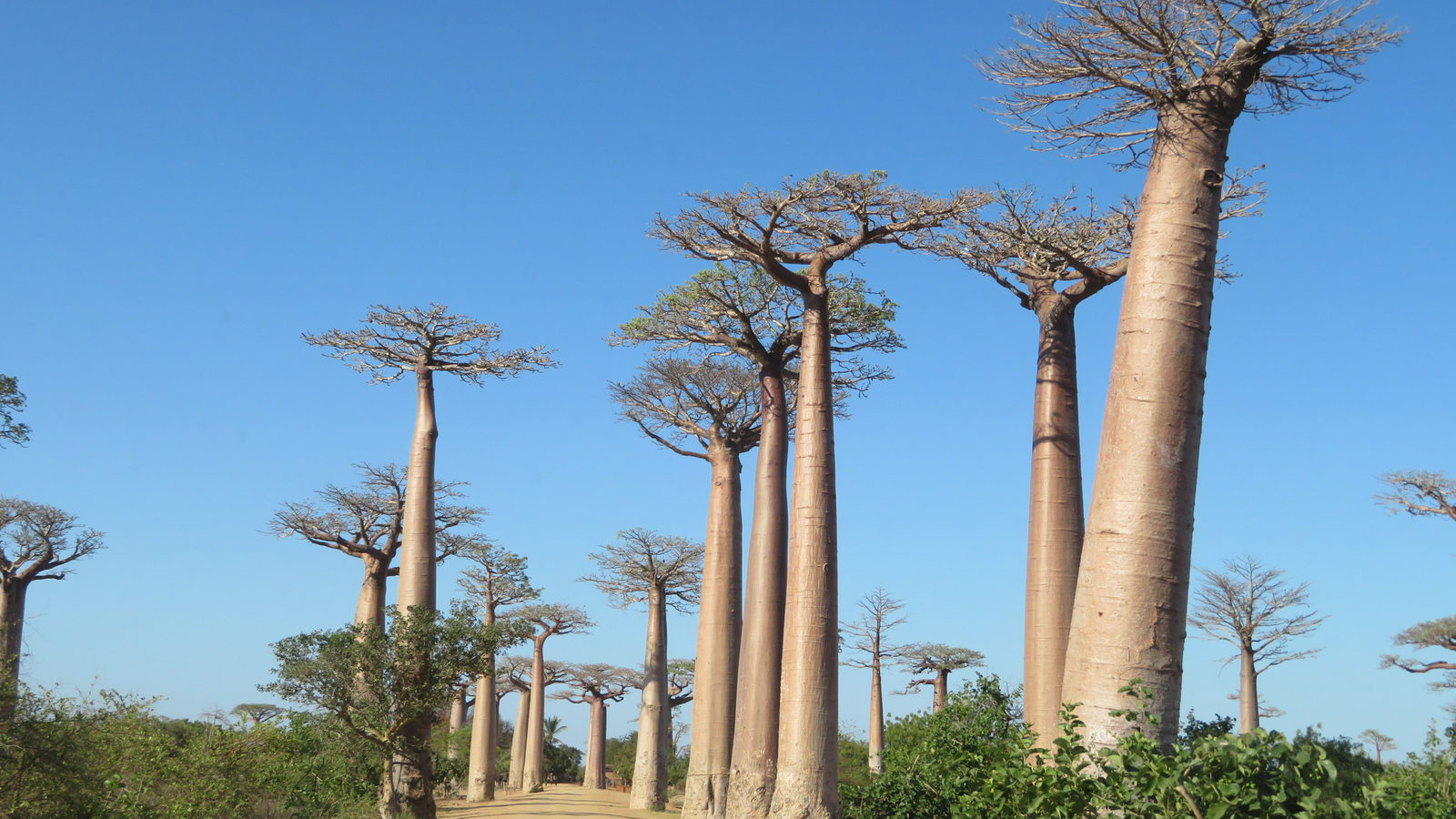
Good morning
On 22 November 1963, President John F. Kennedy was shot and killed while riding through Dealey Plaza in Dallas, Texas. The assassination happened in front of crowds lining the street, and it remains one of the most studied events in American history.
Today's issue looks at places shaped by distance and time, from an island cut off for millions of years to a lease that has barely changed in over a century.
In today's edition
- Why Madagascar spent 88 million years alone
- The Libyan city that produced a Roman emperor
- Why Cuba refuses the rent for Guantanamo Bay
- Why Vesuvius has stayed quiet since 1944
- Spot a country from its outline alone
- Fill a grid with countries that fit
Madagascar · Fact of the day
Madagascar has been alone in the ocean for 88 million years
Many people picture Madagascar, a large island in the Indian Ocean off the coast of southeast Africa, as a piece of Africa that simply broke away. The truth is stranger. Madagascar split from Africa around 160 million years ago, but it did not drift off alone. It stayed joined to a much larger landmass, the block that would become India, for roughly another 70 million years.
Only about 88 million years ago did a second split open along Madagascar's eastern edge, finally cutting it loose from that Indian landmass for good. Geologists know this because rock formed by that split, found along a 1,500 kilometre stretch of coast, can be dated almost exactly. Isolated for so long, Madagascar evolved plants and animals, such as lemurs, found nowhere else on Earth.
↗ Send this fact to a friend32.64° N, 14.27° E · Place of the day
Leptis Magna, Libya
Leptis Magna is a ruined Roman city on the Mediterranean coast of Libya, in the Khoms district east of the capital, Tripoli. It was once a busy trading port, and its stone arches, columns and theatre still stand today, which is why it is now protected as a UNESCO World Heritage site.
What makes it unusual is who was born there. In AD 145, the city gave the Roman Empire one of its own rulers: Septimius Severus, who became emperor in AD 193 and governed until his death in AD 211. He is the only Roman emperor known to have been born in Africa.
He did not die at home. Severus spent his final years campaigning in Britain. He died there in AD 211, at York, a city that served as the empire's base during that campaign.
 Play today's Worldle
↻ Also on the map
Vesuvius has not erupted since 1944 Mount Vesuvius is a volcano near Naples, in southern Italy. It last erupted in March 1944. Hot ash fell on dozens of American bomber planes parked nearby and buried them. The volcano destroyed more planes that week than enemy attacks had during the whole war.
Czechia became the Czech Republic's official short name in 2016 On 17 May 2016, the Czech Republic registered Czechia with the United Nations. It is an extra short name, used alongside the formal name. The country did not stop being called the Czech Republic.
Between issues
Fancy a different kind of challenge? GeoGrid gives you a 3 by 3 grid where each row and column names a category, like a flag colour or a shared border. Fill all nine boxes with countries that fit, before you run out of guesses.
 Play today's GeoGrid
Locate the country
Today's mystery shape · 22 November 2026
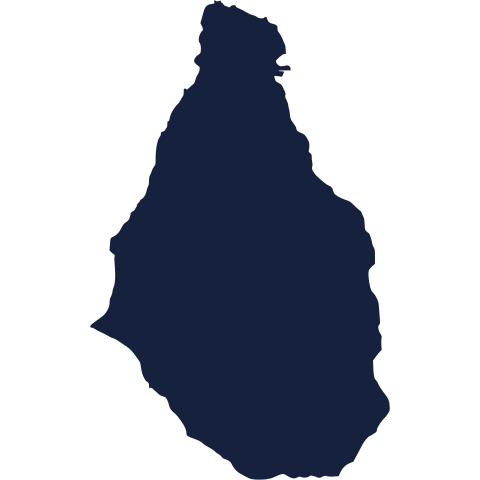
Today's silhouette is waiting for your best guess. Study the outline, think about its coastline and neighbours, then see how close you can get. We reveal the answer tomorrow, so take your time and enjoy the challenge.
Guess it on Worldle →Yesterday, revealed
Yesterday, 21 November 2026
It was Botswana, Yesterday's shape was a tricky one for many readers, with its coastline giving few easy clues. If you placed it correctly, well done. If not, no matter: every guess is a chance to notice a new detail. Tomorrow brings another country to work out.
19.90° N, 75.15° W · By the numbers
The rent the United States pays Cuba for Guantanamo Bay
The United States has leased Guantanamo Bay, a naval base on the coast of Cuba, since 1903. The rent was fixed in gold dollars and has not changed since a 1974 payment set it at $4,085 a year, less than the cost of a second-hand car. Cuba's government has refused to accept the money since 1959, as a protest against the lease itself. Only one cheque has ever been cashed, and that happened by mistake. The site shows how an old agreement can outlast the politics behind it.
FREE · WEEKLY EMAIL · GEOGRAPHY
Put the world in your inbox.
A new geography brief on the site every day, and one in your inbox every week.
That's the world
See you tomorrow. The Teuteuf team
Sources: UNESCO World Heritage Centre, "Rainforests of the Atsinanana" (Madagascar, dossier 1257), Statement of Outstanding Universal Value, criterion (ix) · UNESCO World Heritage Centre: 'Archaeological Site of Leptis Magna', Libya (Dossier 183) · Dipartimento della Protezione Civile (Italian government): "Vesuvio" volcanic risk page · United Nations: "Czechoslovakia and Successor States: Czechia, Slovakia" (Member States / About Us) · U.S. Navy: Commander, Navy Region Southeast, official history page for Naval Station Guantanamo Bay (navy.mil)