Good morning
On 9 November 1989, crowds began tearing down the Berlin Wall, which had divided the German city of Berlin since 1961. People crossed freely between east and west for the first time in nearly three decades. The wall's fall came to symbolise the end of the Cold War, the long standoff between the Soviet Union and the West.
Today's issue looks at places that are easy to picture wrong, from a Pacific mountain taller than Everest to the island where bungee jumping really began.
In today's edition
- Where bungee jumping really began
- Australia's lowest point, a lake that rarely fills
- The mountain that beats Everest underwater
- Argentina's borders and Olympic surfing far from Paris
- Find a country from its shape alone
- Fit countries into a tricky grid
bungee jumping · Fact of the day
Bungee jumping began on Pentecost Island, not in New Zealand
Most people credit New Zealand with inventing bungee jumping. New Zealand only made it famous.
The real origin is Pentecost Island, part of Vanuatu, a country of islands in the South Pacific. For centuries, men there have practised a land diving ritual called Naghol. They leap head first from wooden towers. The towers stand 20 to 30 metres tall, about the height of a seven storey building. Vines are tied to their ankles instead of elastic cords, and stretch just enough to stop them hitting the ground.
In 1988, the New Zealander A. J. Hackett turned the idea into a commercial sport using rubber cords. He openly credited the Vanuatu ritual as his inspiration.
↗ Send this fact to a friend28.60° S, 137.36° E · Place of the day
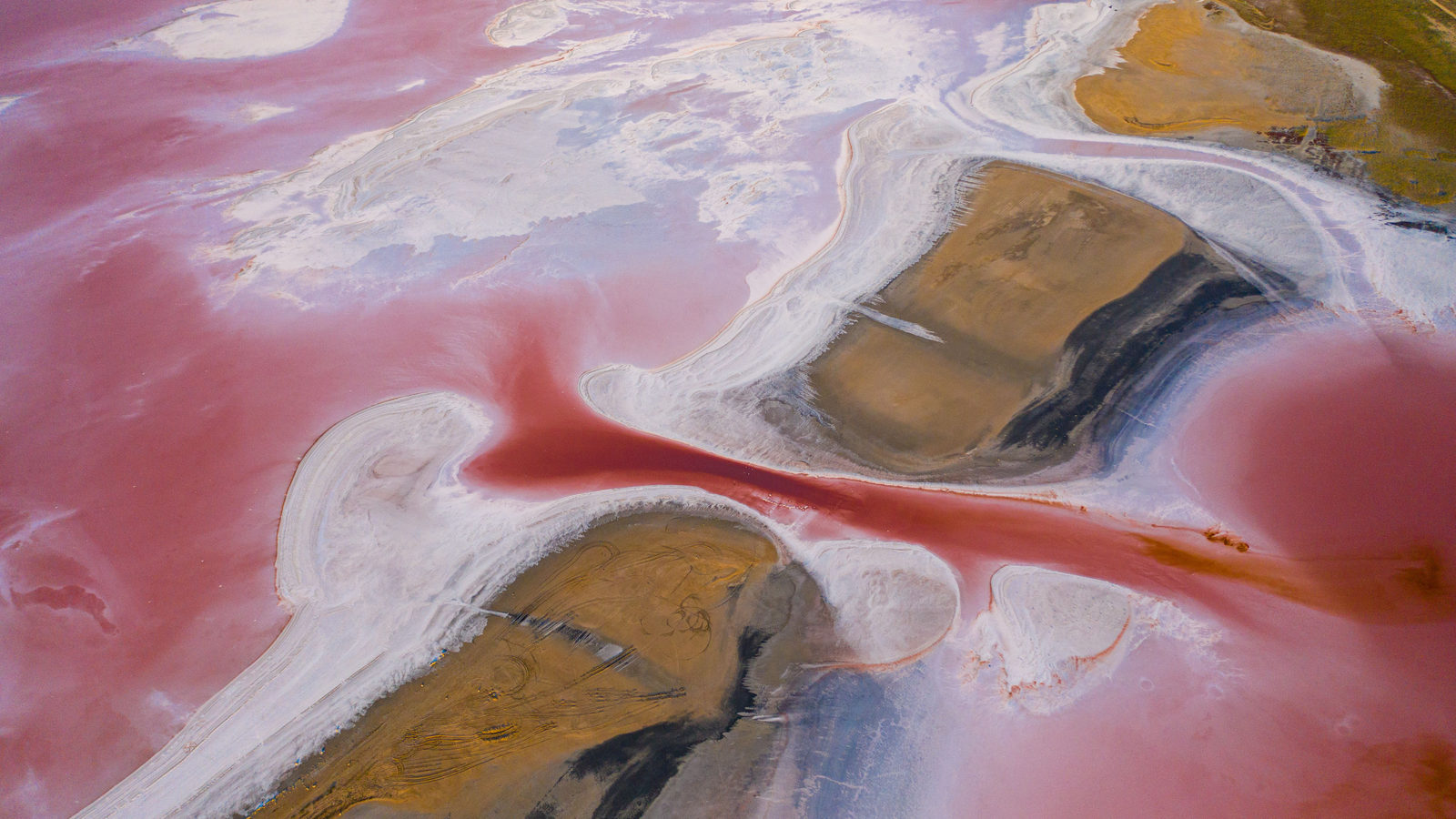
Kati Thanda, Lake Eyre
Kati Thanda, also called Lake Eyre, is a vast salt lake in South Australia. Its floor is Australia's lowest natural point, more than 15 metres below sea level.
The lake covers about 9,700 square kilometres, making it the world's fourth largest terminal lake, meaning its water has nowhere else to flow. It drains a basin of 1.2 million square kilometres, about one sixth of the Australian continent.
Even so, the lake rarely fills. It has done so completely only three times in the past 160 years. The last time was in 1974, when it reached a depth of 6 metres.
 Play today's Worldle
↻ Also on the map
Argentina has exactly five land neighbours Argentina is the triangle-shaped country at the southern tip of South America. It covers 2,780,400 square kilometres, making it the second largest country in South America and the eighth largest in the world. It shares a border with exactly five countries, and its capital is Buenos Aires.
Paris 2024's surfing was held 15,700 km from Paris In 2024, the Olympic surfing contest was held at Teahupo'o, on the island of Tahiti in French Polynesia, about 15,700 kilometres from Paris. It was still French soil, since French Polynesia belongs to France.
Between issues
Fancy a change of pace? GeoGrid gives you a 3 by 3 grid where each row and column sets a different challenge, and you fill every square with a country that fits both at once. It rewards knowing your geography from a few unusual angles.
 Play today's GeoGrid
Locate the country
Today's mystery shape could not be added to this issue. You can still play today's Worldle.
Yesterday, revealed
Yesterday's answer could not be added to this issue.
19.72° N, 155.47° W · By the numbers
The world's tallest mountain, measured from the sea floor
Mount Everest, in the Himalayas, is the highest point above sea level on Earth. But Mauna Kea, a volcano on Hawaii's Big Island, is taller overall. Measured from its base on the Pacific sea floor, it stands about 10,205 metres high, roughly 1,350 metres more than Everest. The catch is that most of it is hidden. Only its top 4,205 metres, about two fifths, rises above the water. The rest is underwater, taller than ten Eiffel Towers stacked on top of each other. It shows that height depends on where you choose to start measuring.
FREE · WEEKLY EMAIL · GEOGRAPHY
Put the world in your inbox.
A new geography brief on the site every day, and one in your inbox every week.
That's the world
See you tomorrow. The Teuteuf team
Sources: CNN Travel: 'Meet Vanuatu's land-diving daredevils, who inspired bungee jumping' · NASA Earth Observatory: "Water Pours Into Australia's Lake Eyre" (Image of the Day) · World Bank Open Data: Surface area, Argentina and Peru (indicator AG.SRF.TOTL.K2, from FAO) · Encyclopædia Britannica: "Tahiti" · NOAA National Ocean Service, "What is the highest point on Earth as measured from Earth's center?" (US federal agency, .gov)